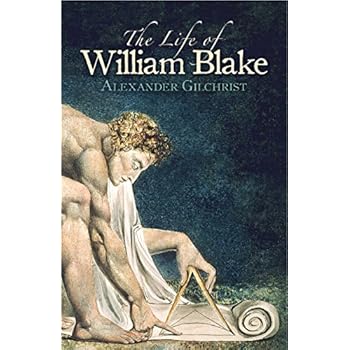
The Life of William Blake (Dover Fine Art, History of Art)
Category: Books,Biographies & Memoirs,Arts & Literature
The Life of William Blake (Dover Fine Art, History of Art) Details
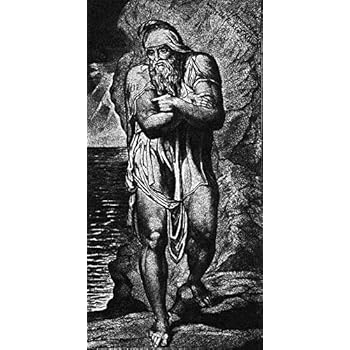
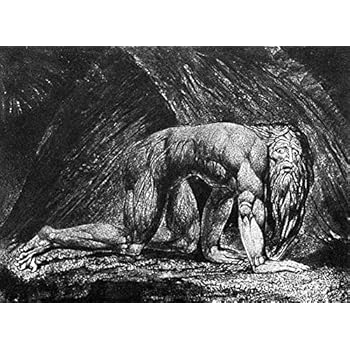
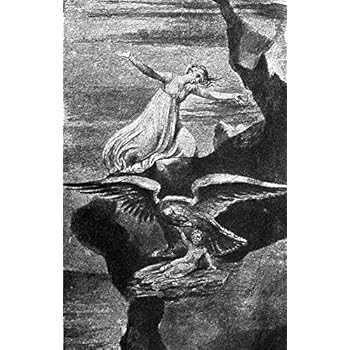
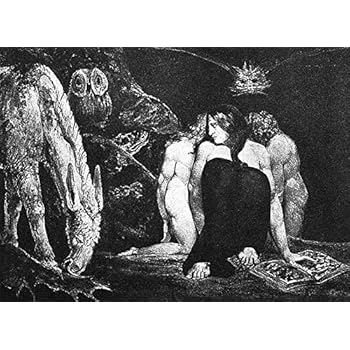
Amazon.com Review Of William Blake, William Wordsworth said, "There is something in the madness of this man which interests me more than the sanity of Lord Byron and Walter Scott." Blake was, after all, known to report on his "conversations" with such dead notables as the great Milton. He felt no constraint in sharing the bold content of his vivid imagination. "Once [he] was walking down Cheapside with a friend," Alexander Gilchrist writes. "Suddenly he took off his hat and bowed low. 'What did you do that for?' 'Oh! that was the Apostle Paul.'" This full-length study of the visionary artist and poet, first published in 1863, is credited with bringing to light not only the unique genius of William Blake, but his body of work. When Gilchrist wrote this critical biography, the world was largely ignorant of William Blake (1757-1827). Most of his works--visual and poetic--were "never published at all ... [and] Blake's poems were ... not even printed in his life-time; simply engraved by his own laborious hand." The first-edition printing of Songs of Innocence and Experience, for example, consisted of slightly more than 20 copies. Nevertheless, Blake was not spared the ironic fate of so many posthumously honored artists. At the time of Gilchrist's writing, "Blake drawings, Blake prints fetch prices which would have solaced a life of penury, had their producer received them." Of course, it's no surprise that The Life of William Blake is drenched in the style peculiar to the late 19th century, as if proclaimed in an echo chamber where lofty and pious tones vie with the sentimental. Still, who isn't drawn into the central tragedy of Blake's life? He had the capacity to become a great public and religious poet, but instead turned in upon himself, gaining neither reputation nor a following. Blake was simply not of his time, "partly by choice; partly from the necessities of imperfect education." Although in paperback, this volume suggests antiquity--the type fonts are reminiscent of those used in the dusty, old tomes found in Grandma's attic. Chapter titles reflect the 19th-century sensibility ("A Boy's Poems," "Struggle and Sorrow," "Mad or Not Mad?"). The 39 chapters also reveal Gilchrist's exhaustive study of Blake's life. His report of Blake's first vision at the age of 8 reveals the 19th-century tone: "Sauntering along, the boy looks up and sees a tree filled with angels, bright angelic wings bespangling every bough like stars." Unabridged and illustrated with 40 black-and-white photographs of Blake's engravings, this first critical biography will interest the Blake scholar wishing to add a more period feel to his or her body of research (100 years separate Gilchrist from his subject), as well as the Blake fan in the mood for a courtly and doting guide. --Hollis Giammatteo Read more About the Author A seminal figure in both the literature and the visual arts of the Romantic age, William Blake (1757–1827) dwelt his entire life in London, where he made his living as an engraver. The visionary poet and painter, whose art was misunderstood and overlooked during his lifetime, created intensely spiritual works informed by his strong philosophical and religious beliefs. Read more


Reviews
Gilchrist had two things going for him as Blake's first biographer. He remains the only one of them all who actually got to talk to people who knew Blake, who were friends with he and his wife. Secondly, he was alert enough to recognize Blake's genius despite the neglect with which it continued to be treated even as Gilchrist wrote the book. Just as Harold Bloom suggests that Emerson proved his own genius by being the first to recognize Whitman's, the same ought to be said of Gilchrist. Throughout Gilchrist's account, he cites conversations and letters exchanged with various friends of Blake, from Samuel Palmer to Crabb Robinson and others. Palmer serves up a gorgeous and sensitive portrait of Blake in a letter to Gilchrist, while Gilchrist's copious quoting of Robinson's talks with Blake are ceaselessly fascinating. To read this first of countless Blake biographies before one of the more recent ones is to strap yourself into a time machine and launch from one world to entirely another. Writing in the 1860s, Gilchrist's language reflects just how jaded we've become over time. Full of purple but no less delightful prose, Gilchrist's often adoring book stops at nothing to ensure the sanctity of his subject. One of Blake's early and comparatively minor "Song" poems from the "Poetical Sketches" is described as possessing "shy evanescent tints and aroma as of pressed rose-leaves." Yet for all the book's haughtiness, it is Gilchrist's fascinating renunciation of criticism that most distinguishes him from we post-moderns: "Criticism is idle. How analyze a violet's perfume, or dissect the bloom on a butterfly's wing?" It would be a long way to Freud, Brooks, Frye, Vendler and Bloom. While Gilchrist often goes to boring lengths in describing Blake's paintings and engravings (as in the tedious "Supplementary" chapter at the end), it is a good thing he did decide to lay off the criticism, as Gilchrist often reveals a complete and astonishing inability to fathom so much of Blake's work. He repeatedly surrenders to the abstractness of Blake's epics, condemning Jerusalem's language as "words empty of meaning to all but him who uttered them" and says of Blake's "Milton" that "few are the readers who will ever penetrate beyond the first page or two." But it is the book's charm that designates it a literary monument. "Fully to appreciate the poetry as the lad Blake composed in the years 1768-77. let us call to mind the dates at which first peeped above the horizon the cardinal lights which people our modern poetic heavens," Gilchrist carries on at the book's onset. The author often blurs the line between eloquence and coherence early on, but soon, as if the immensity of Gilchrist's project gradually wore him down, the book assumes a far more pedestrian tone and becomes all the more wrenching a read because of it. The book's most powerful moment comes in a chapter called "Personal Details" which, if you can sift through Gilchrist's romantic elaborations, makes for a singularly moving document of Blake, the man and the artist, including such meticulously vivid observations as to his clothes, the shape of his head and nose, the look in his eyes, the way he carried his five-foot-six frame. "his clothes were threadbare," Gilchrist writes, "and his gray trousers had worn black and shiny in front, like a mechanic's. Out of doors, he was more particular, so that his dress did not, in the streets of London, challenge attention either way." These details along with those offered by many of the Blake acquaintances Gilchrist was able to interview throughout the book make it an indispensable document of a deeply poignant and fascinating life.